About Diaphragm Type Compressors
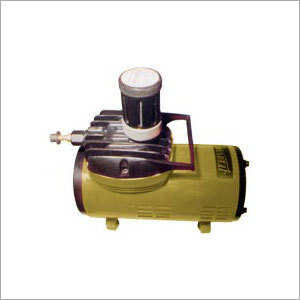
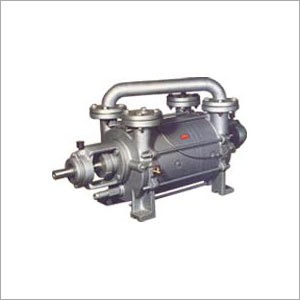
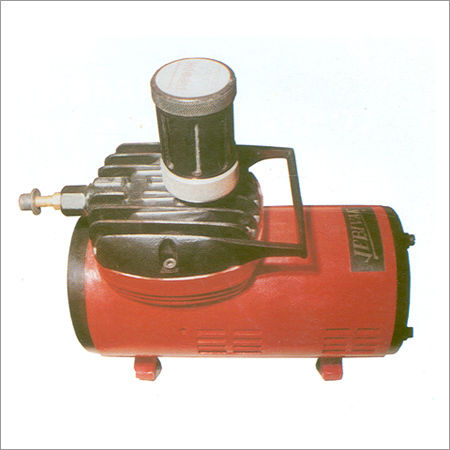
Diaphragm Type Compressors
We are achieving new horizons in the field of manufacturing and exporting Diaphragm Type Compressors. Compressors offered by us are made from the premium quality material, purchased from the reliable vendors of the industry. Diaphragm Type Compressors are rust & corrosion resistant, efficient performer and requires negligible maintenance. Our clients can avail these compressors with the required modifications according to their needs. Furthermore we offer the vast assortment of our compressors at market leading prices to our precious clients.
Technical Specifications:
|
| MODEL | DP-1 |
| Number of Stages | One |
| Air flow capacity (lit/min.) | 40 |
| Vacuum (mm of Hg.) | 570 |
| Pressure (Kg/Cm2) | 2.0 |
| Electric motor (HP/Phase) | 1/3 /single |
| Approx weight (Kgs.) | 7.0 |
| Approx. Dimensions (mm) | 240 X 115 X 190 |
Material of construction:
| Housing | Aluminium |
| Head | Aluminium |
| Diaphragm | Rubber / PTFE coated |
Advanced Oil-Free TechnologyDiaphragm Type Compressors utilize a unique oil-free mechanism that ensures clean compressed air output. This feature not only reduces maintenance needs but also prevents contamination, making these compressors highly suitable for sensitive environments like medical and laboratory settings where air purity is crucial.
Versatile Power and Drive OptionsEngineered for adaptability, these compressors are compatible with both single and three phase electric power supplies. Users can select between direct and belt-driven models, with power ratings from 1 HP to 7.5 HP, allowing tailored solutions for different operational demands and application scales.
Quiet, Efficient OperationDesigned as low-noise machines with fine filtration, Diaphragm Type Compressors comply with stringent noise standards. The air-cooled system further improves efficiency and durability, making them a top choice for settings where silent and reliable air supply is essential.
FAQs of Diaphragm Type Compressors:
Q: How does a diaphragm type compressor operate?
A: A diaphragm type compressor works by using a flexible diaphragm that moves back and forth to compress air. This oil-free technology ensures the compressed air remains uncontaminated, which is essential for applications requiring high purity air.
Q: What are the main advantages of choosing this compressor over other types?
A: The primary advantages include oil-free operation, low noise levels, and low maintenance. Its fine filtration system and air-cooled design make it ideal for industries needing clean, quiet, and reliable compressed air.
Q: When is it best to use a diaphragm type compressor?
A: Diaphragm type compressors are best used in scenarios requiring contamination-free, oil-free compressed airsuch as in laboratories, medical, pharmaceutical, and food processing industries where air purity is a priority.
Q: Where can Diaphragm Type Compressors be installed?
A: These compressors can be installed indoors in manufacturing facilities, laboratories, hospitals, and research centers. Their low noise output and air-cooled operation enable flexible placement without extensive ventilation or soundproofing.
Q: What is the process for maintaining this compressor?
A: Maintenance is straightforward due to the oil-free design. Regular tasks include checking the diaphragm for wear, inspecting filters for cleanliness, and ensuring belt tension in belt-driven models. This process helps maintain efficiency and prolongs equipment life.
Q: How does the control system enhance compressor usage?
A: With both automatic and manual control options, users can tailor the compressors operation to their process requirements. Automatic controls provide convenience, while manual mode allows for customized settings based on operational needs.
Q: What benefits does air cooling provide in this compressor?
A: The air cooling method prevents overheating, supports continuous operation, and contributes to the compressors longevity. It also removes the need for complex water-cooling systems, simplifying setup and reducing maintenance costs.

 Send Inquiry



 Send Inquiry

 Send Inquiry